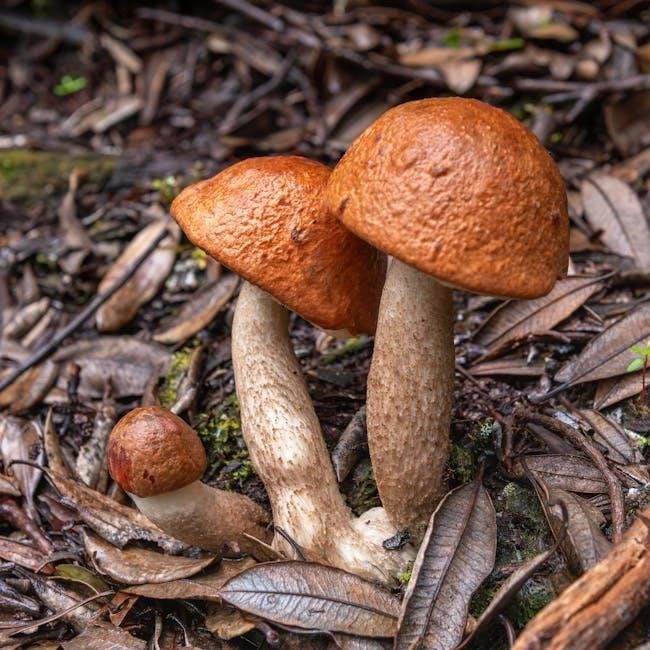
a field guide to australian fungi pdf
Explore the magical world of Australian fungi with our comprehensive field guide! Identify mushrooms, learn about their habitats & uses. Download the PDF now!
A Field Guide to Australian Fungi: Comprehensive Plan (Updated 03/31/2026)
This plan details creating a comprehensive field guide, potentially as a PDF, assisting both novice and experienced enthusiasts in identifying Australian fungi, lichen, and bryophytes.
The guide will consolidate existing resources, offering accessible identification tools and fostering a deeper understanding of these fascinating organisms within Australian ecosystems.
Australia boasts an incredibly diverse fungal flora, largely unexplored and underestimated. From the arid outback to the lush rainforests, fungi play crucial roles in nutrient cycling, plant health, and ecosystem stability. This field guide aims to unlock the secrets of this hidden kingdom, providing a practical resource for anyone interested in learning about Australian fungi.
Historically, fungal identification has been challenging due to their cryptic nature and complex taxonomy. However, increasing accessibility to resources – including potential downloadable PDF guides – is empowering citizen scientists and fostering a growing appreciation for these organisms. This guide will bridge the gap between scientific complexity and practical field identification.
The scope of Australian fungi is vast, encompassing thousands of species, many of which remain undiscovered. This guide will focus on commonly encountered genera and species, providing detailed descriptions, photographs, and identification keys. It will also highlight the ecological significance of fungi and their importance in maintaining healthy Australian landscapes. A digital PDF format will allow for easy updates and wider distribution of this vital information.
Why a Field Guide is Essential
A dedicated field guide to Australian fungi is critically needed due to the increasing interest in foraging, coupled with the presence of both edible and highly toxic species. Misidentification can have severe consequences, making accurate identification tools paramount. Currently, resources are fragmented and often inaccessible to the general public.
This guide, particularly in a readily available PDF format, will empower individuals to confidently identify fungi encountered in the field. It will promote responsible foraging practices, minimizing the risk of accidental poisoning and encouraging sustainable interactions with fungal ecosystems. Furthermore, it will facilitate citizen science initiatives, contributing valuable data to ongoing fungal research.
The lack of a comprehensive, user-friendly resource hinders the documentation of fungal diversity in Australia. A well-designed PDF guide will serve as a vital tool for researchers, land managers, and conservationists, aiding in the monitoring of fungal populations and the assessment of ecosystem health. It will also foster a greater appreciation for the often-overlooked importance of fungi in Australian biodiversity.
Understanding Fungal Taxonomy & Classification
Fungal taxonomy is a dynamic field, constantly evolving with new molecular data. Our field guide, including a digital PDF version, will reflect the current understanding of fungal classification, acknowledging the complexities and ongoing revisions within the kingdom Fungi. It will move beyond traditional morphological classifications, incorporating phylogenetic insights where appropriate.
The guide will explain the hierarchical system – Kingdom, Phylum, Class, Order, Family, Genus, and Species – providing context for understanding fungal relationships. It will highlight the challenges in fungal classification, such as cryptic species and the limitations of relying solely on macroscopic features.
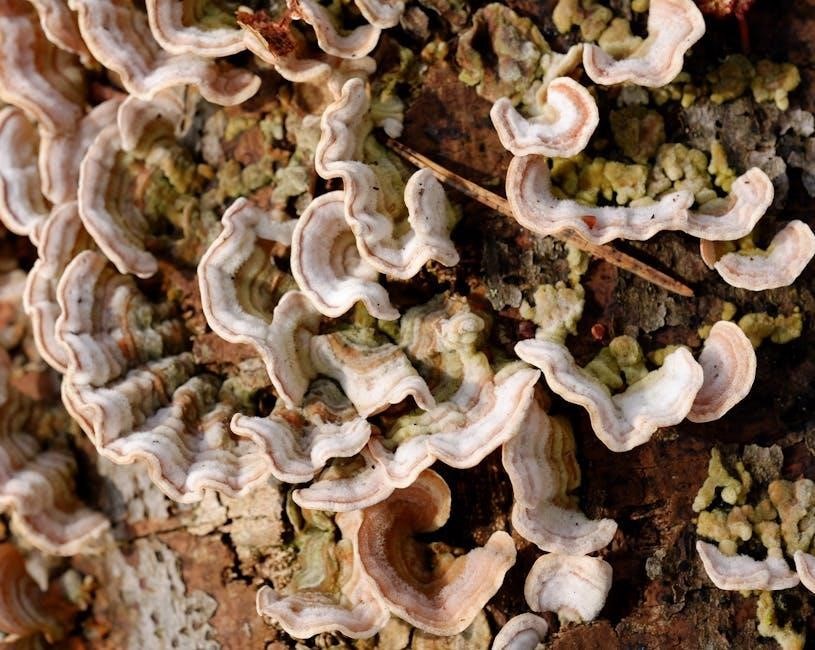
A dedicated section within the PDF will detail the major fungal groups found in Australia, outlining their key characteristics and ecological roles. This will empower users to navigate the diversity of Australian fungi and appreciate the evolutionary history underpinning their classification. The guide will emphasize that identification is a process of narrowing possibilities based on taxonomic principles.
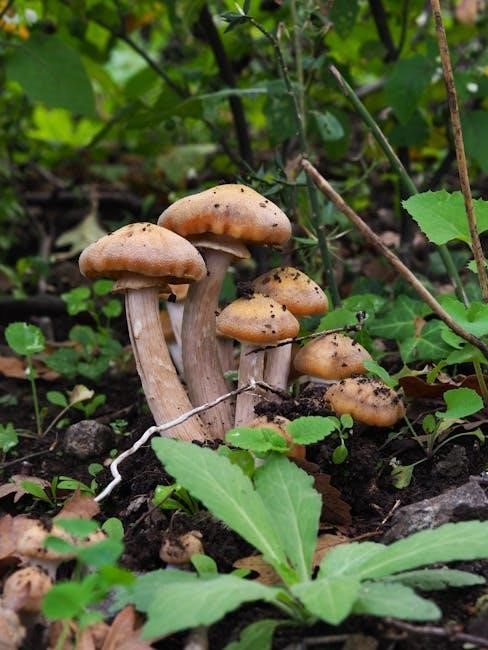
Major Fungal Groups in Australia
Australia boasts remarkable fungal diversity, necessitating a detailed overview of major groups within our field guide – and its accompanying PDF format. We will focus on Ascomycota (sac fungi), Basidiomycota (club fungi – including mushrooms and puffballs), and Zygomycota (zygote fungi), representing the most commonly encountered groups.
The guide will dedicate sections to each, detailing their defining characteristics, reproductive strategies, and ecological significance. For example, the Basidiomycota section will explore diverse forms like agarics, boletes, and bracket fungi. The PDF will include visually distinct keys to aid identification within each group.
Less common, yet important groups like Chytridiomycota (chytrids) – impacting amphibian populations – and Glomeromycota (arbuscular mycorrhizal fungi) will also be covered. The guide will emphasize that understanding these groups is crucial for appreciating fungal roles in Australian ecosystems, and the PDF will offer supplementary images and descriptions.
The Importance of Accurate Identification
Accurate fungal identification is paramount, extending beyond mere curiosity. Misidentification can have serious consequences, particularly concerning edibility – some Australian fungi are lethally poisonous. Our field guide, and its accessible PDF version, will prioritize safety through detailed identification protocols.
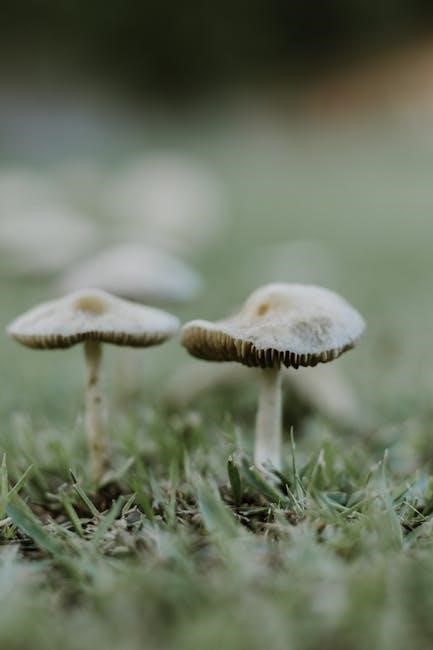
Beyond toxicity, correct identification is vital for ecological studies. Fungi play crucial roles in nutrient cycling, plant health, and ecosystem stability. The PDF will feature clear warnings and disclaimers regarding consumption, emphasizing the need for expert verification.
Furthermore, accurate identification aids conservation efforts. Recognizing rare or threatened species allows for targeted protection strategies. The guide will incorporate information on look-alike species, highlighting subtle differences crucial for avoiding errors. The downloadable PDF will serve as a readily available resource for responsible fungal exploration and documentation, promoting informed decision-making.
Key Features for Fungal Identification
This field guide, including its convenient PDF format, will emphasize a multi-faceted approach to fungal identification. We’ll detail both macroscopic and microscopic characteristics, catering to varying levels of expertise and available equipment.
The PDF will feature detailed photographic illustrations showcasing key features like cap shape, size, and color variations. Gill attachment types and spore print color determination will be explained with clear diagrams. Stalk characteristics – presence, texture, and coloration – will also be thoroughly covered.
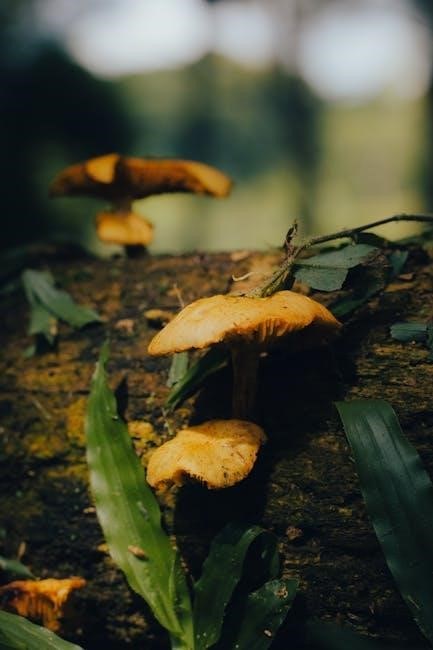
For those with access to microscopy, the guide will delve into spore morphology, including shape, size, and ornamentation. The downloadable PDF will include detailed descriptions of cystidia and other crucial hyphal structures. This comprehensive approach, readily available in the PDF, ensures users can confidently navigate the complexities of fungal identification, promoting accurate species determination.
Macroscopic Features (Visible to the Naked Eye)
Our field guide, available as a downloadable PDF, prioritizes easily observable characteristics for initial fungal identification. These macroscopic features form the foundation for narrowing down possibilities before considering microscopic details.
The PDF will dedicate significant space to illustrating cap morphology – variations in shape (convex, flat, umbonate), size ranges, and a comprehensive color chart. Detailed photographs will showcase these differences. We’ll also cover gill attachment types (free, adnate, decurrent) with accompanying diagrams.
Spore print color determination, a crucial step, will be explained with clear instructions and visual aids within the PDF. Finally, stalk characteristics – presence or absence, texture (smooth, scaly, fibrous), and color variations – will be thoroughly documented. This PDF resource empowers users to make informed preliminary identifications in the field, even without specialized equipment.
Cap Shape, Size, and Color
The downloadable PDF field guide will dedicate a substantial section to cap characteristics, recognizing their importance in initial fungal identification. We’ll illustrate common cap shapes – convex, flat, umbonate, depressed, and funnel-shaped – with detailed photographs and clear diagrams.
Size will be presented with typical ranges for Australian species, acknowledging variations due to environmental factors. A comprehensive color chart, utilizing standardized terminology, will be included in the PDF to aid accurate color description. This PDF resource will emphasize that color can change with age and moisture levels.
Furthermore, the guide will highlight subtle variations like texture (smooth, scaly, sticky) and the presence of any ornamentation. The PDF will also include a glossary of terms related to cap morphology, ensuring accessibility for all users. Accurate cap description is key to successful identification.
Gill Attachment and Spore Print Color
Our Australian fungi PDF field guide will thoroughly cover gill attachment, a crucial identification feature. We’ll detail the four primary types: free, adnate, decurrent, and notched, using illustrative diagrams and photographs of Australian species exhibiting each. The PDF will explain how to accurately assess gill attachment in the field.
Spore print color, another vital characteristic, will receive extensive attention. The guide’s PDF format will include a step-by-step guide on obtaining a spore print, along with a color key showcasing common spore print hues – white, cream, pink, brown, and black.
The PDF will caution users that spore print color can sometimes be variable, and provide guidance on interpreting ambiguous results. This downloadable resource will emphasize the importance of using a clean, contrasting surface for optimal spore print visibility. Accurate spore print determination is essential for narrowing down potential species.
Stalk Characteristics (Presence/Absence, Texture, Color)
The Australian fungi PDF field guide will dedicate a section to stalk (or stipe) characteristics, recognizing its significance in fungal identification. We’ll address variations in stalk presence – noting species lacking a distinct stalk altogether. The PDF will feature detailed descriptions and photographs illustrating diverse stalk textures, including smooth, fibrous, scaly, and viscid surfaces.
Color variations will be extensively documented, ranging from shades of white, cream, and brown to more vibrant hues. This downloadable guide will explain how stalk color can sometimes be influenced by environmental factors, and caution against relying solely on this feature.
The PDF will also cover stalk shape (cylindrical, club-shaped, tapering) and the presence or absence of a ring (annulus) or volva at the base. Users will learn to accurately observe and record these features, aiding in precise species determination. The field guide’s PDF format allows for high-resolution images showcasing these subtle details.
Microscopic Features (Requires a Microscope)
The Australian fungi PDF field guide acknowledges that definitive identification often necessitates microscopic examination. This section, geared towards more experienced mycologists, details crucial microscopic features. The PDF will emphasize the need for proper slide preparation techniques for accurate observation.
Detailed descriptions and photomicrographs will illustrate spore morphology – focusing on shape (ellipsoid, cylindrical, globose), size, and ornamentation (smooth, warty, spiny). This downloadable resource will explain how spore characteristics are fundamental to taxonomic classification.
The guide’s PDF format will showcase images of cystidia – specialized hyphal structures – and other hyphal features like septa and clamp connections. Users will learn to identify different cystidia types and interpret their significance. The PDF will also include a glossary of microscopic terms. This comprehensive field guide aims to bridge the gap between macroscopic observation and precise microscopic analysis.
Spore Morphology (Shape, Size, Ornamentation)
The Australian fungi PDF field guide dedicates significant attention to spore morphology, a cornerstone of fungal identification. This section of the PDF provides a detailed exploration of spore characteristics, crucial for differentiating species. Users will find clear explanations of common spore shapes – including ellipsoid, cylindrical, globose, and amygdaliform – accompanied by illustrative diagrams.
The PDF emphasizes the importance of accurate spore size measurements, providing guidance on using a microscope’s calibrated eyepiece. Detailed descriptions cover spore ornamentation, ranging from smooth walls to intricate patterns like warts, spines, and ridges. The downloadable guide will include a key to common ornamentation types.
This resource will explain how spore features relate to fungal taxonomy and ecology. The PDF will feature photomicrographs showcasing diverse spore morphologies found in Australian fungi, enabling confident identification. Users will learn to interpret these features and utilize them in conjunction with other characteristics.
Cystidia and Other Hyphal Structures
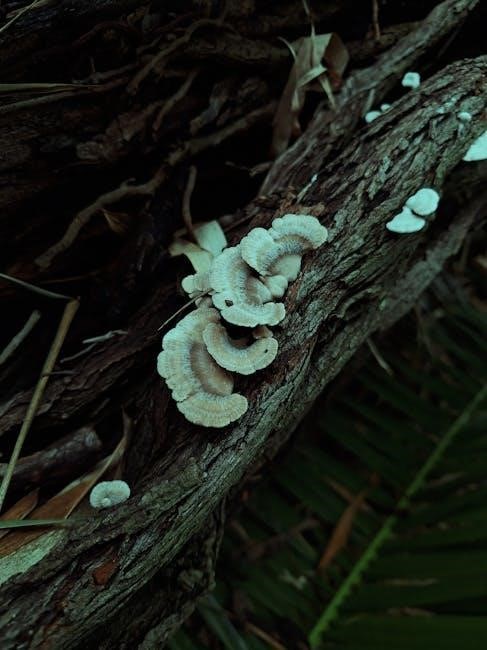
The Australian fungi PDF field guide delves into the often-overlooked, yet vital, world of hyphal structures, particularly cystidia. This section of the PDF provides a comprehensive overview of these specialized cells, crucial for accurate species identification. Users will discover detailed descriptions of various cystidia types – including cheilocystidia, pleurocystidia, and basidioles – alongside illustrative diagrams.
The PDF emphasizes the importance of observing cystidial features like shape, size, and wall ornamentation. Detailed explanations cover the role of hyphal systems – monomitic, dimitic, and trimitic – in fungal classification. The downloadable guide will include a glossary of relevant terminology.
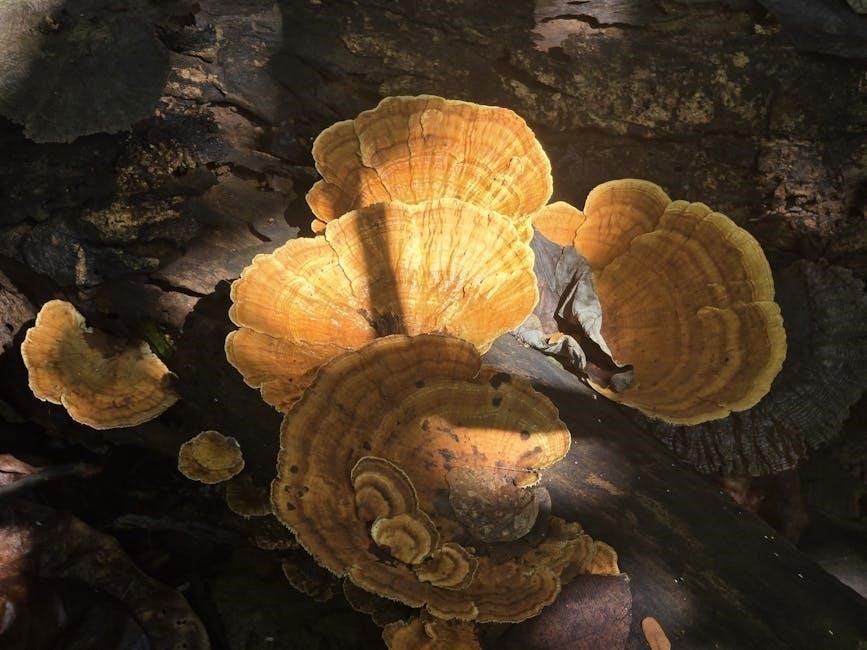
This resource will explain how these microscopic structures contribute to fungal function and taxonomy. The PDF will feature photomicrographs showcasing diverse hyphal structures found in Australian fungi, aiding confident identification. Users will learn to recognize these features and integrate them with macroscopic observations.
Popular Australian Fungi Field Guides – A Review
Our comprehensive Australian fungi PDF acknowledges existing resources, offering a comparative review of popular field guides. We assess “Fungi of Australia” by Bruce Fuhrer, noting its extensive species coverage and detailed descriptions, but also its potential limitations for beginners. The PDF also examines “Australian Mushrooms & Toadstools” by Jeremy Hallett, highlighting its user-friendly approach and focus on edible species.
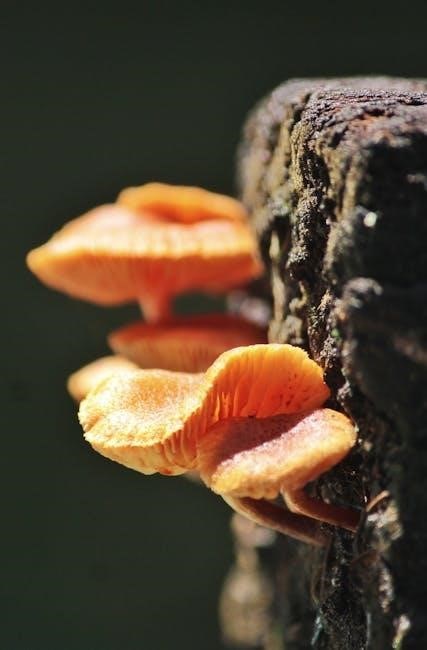
This section of the PDF critically evaluates the strengths and weaknesses of each guide, considering factors like photographic quality, identification keys, and regional focus. We also review readily available online resources and digital field guides, assessing their accuracy and accessibility. The PDF provides links to reputable websites and apps.
The aim is to help users select the most appropriate resource for their needs, supplementing these with our own PDF’s detailed information. This review positions our guide as a valuable addition to the existing literature, offering a modern, accessible, and comprehensive resource for Australian fungi identification.
“Fungi of Australia” by Bruce Fuhrer
Fuhrer’s “Fungi of Australia” remains a cornerstone for mycological study within the country, and our Australian fungi PDF acknowledges its significant contribution. Published in 2005, it boasts an impressive catalog of species, accompanied by detailed morphological descriptions. However, the PDF notes that the photographic quality, while adequate, doesn’t always facilitate easy identification for novice users.
The book’s strength lies in its comprehensive taxonomic coverage, making it invaluable for researchers and experienced mycologists. Our PDF highlights the detailed keys provided, though these can be challenging for beginners lacking prior knowledge. We also address the book’s organizational structure, noting its reliance on traditional classification methods.
Compared to newer resources, “Fungi of Australia” lacks the interactive features of digital field guides. The PDF positions Fuhrer’s work as a foundational text, complementing it with modern identification tools and a more user-friendly approach, aiming to bridge the gap for all skill levels.
“Australian Mushrooms & Toadstools” by Jeremy Hallett
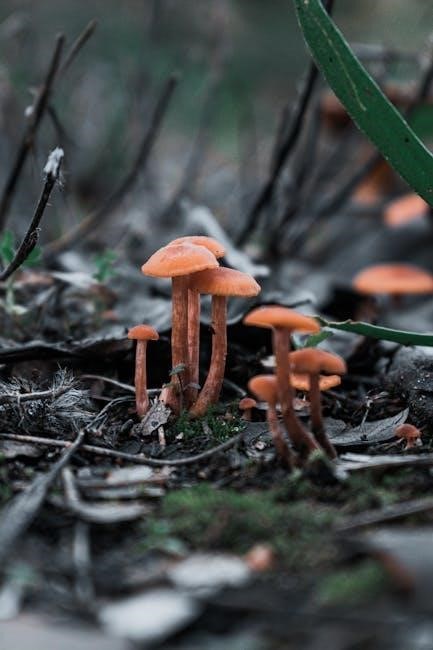
Hallett’s “Australian Mushrooms & Toadstools”, published in 2005, offers a visually appealing introduction to Australian fungi, a feature our Australian fungi PDF aims to emulate with enhanced digital clarity. The book excels in its accessible language and focus on commonly encountered species, making it suitable for beginners. However, the PDF acknowledges its limited scope compared to Fuhrer’s more exhaustive work.
A key strength is the emphasis on ecological context, describing habitats and associations. Our PDF incorporates this aspect, expanding on the information with interactive maps and habitat guides. The book’s photographic quality is generally good, though some images lack the detail needed for precise identification. The PDF addresses this with high-resolution images and zoom capabilities.
Compared to digital resources, Hallett’s guide lacks search functionality and the ability to update information easily. The PDF aims to overcome these limitations, providing a dynamic and continuously updated resource for Australian fungi identification.
Online Resources & Digital Field Guides
Numerous online resources complement traditional field guides, and our Australian fungi PDF will integrate these effectively. Websites like the Australian Museum and various mycological societies offer valuable information, though often fragmented and lacking a unified search interface. The PDF aims to curate these resources, providing a centralized hub for information.
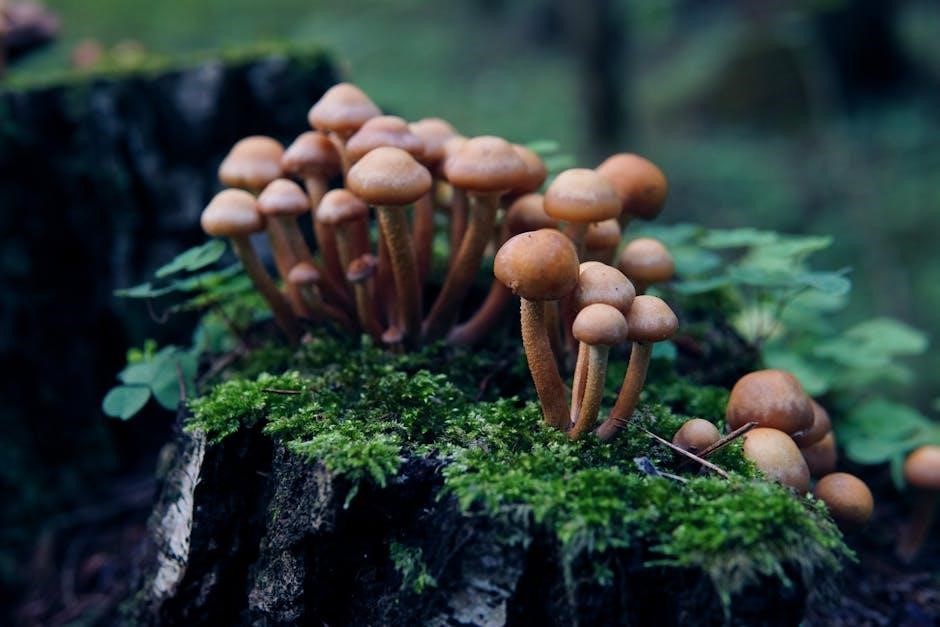
Digital field guides, including apps and online databases, offer advantages like portability and searchability. However, many lack the comprehensive coverage or scientific rigor of established publications. Our PDF seeks to bridge this gap, combining the convenience of digital access with the accuracy of expert-reviewed content.
Interactive keys and image recognition tools are emerging technologies that will be incorporated into future iterations of the PDF. Currently, platforms like iNaturalist allow users to contribute observations and aid in identification, a feature we will link to directly. The goal is a dynamic, evolving resource, leveraging the power of citizen science.
Edible vs. Poisonous Fungi in Australia
A critical section of our Australian Fungi PDF will be dedicated to differentiating edible from poisonous species. Australia boasts a range of both, and misidentification can have severe, even fatal, consequences. The guide will emphasize that absolute certainty is paramount before consuming any wild mushroom.
Detailed descriptions and high-quality photographs will highlight key distinguishing features of commonly encountered poisonous fungi, such as Amanita species and Cortinarius. We will clearly state that no general rules exist for determining edibility; folklore and “tests” are unreliable and dangerous.
The PDF will also showcase safely identifiable edible species, providing recipes and guidance on responsible harvesting. However, a strong disclaimer will reiterate the need for expert confirmation before consumption. Furthermore, we will link to resources from poison control centers and mycological experts for immediate assistance in cases of suspected poisoning.
Common Genera & Species – Identification Focus
A substantial portion of the Australian Fungi PDF will focus on detailed profiles of frequently encountered fungal genera and species. This section will prioritize practical identification, catering to both beginners and those seeking to refine their skills. Genera like Russula, Cortinarius, and Amanita – known for their diversity and potential toxicity – will receive extensive coverage.
Each species profile will include multiple high-resolution photographs showcasing variations in appearance, detailed macroscopic descriptions, and notes on habitat and seasonality. We will also incorporate simplified keys to aid in identification, focusing on readily observable characteristics. Microscopic features will be briefly mentioned, directing users to resources for further investigation;
The PDF will highlight look-alike species, emphasizing subtle differences crucial for accurate identification. Regular updates will incorporate new discoveries and refine existing profiles, ensuring the guide remains a current and reliable resource for Australian mycologists and enthusiasts.
Fungal Ecology & Habitats in Australia
The Australian Fungi PDF will dedicate a significant section to exploring the diverse ecological roles fungi play within Australian ecosystems. This will move beyond simple identification, providing context for understanding where and why specific fungi are found. We will detail the varied habitats – from eucalyptus forests and rainforests to arid landscapes – and the fungal communities they support.
The guide will explain fungal relationships with native plants, including mycorrhizal associations vital for nutrient exchange. Decomposition processes and the role of saprophytic fungi in nutrient cycling will also be covered. Specific examples will illustrate how habitat characteristics influence fungal distribution and abundance.
This section aims to foster an appreciation for the interconnectedness of life and the crucial role fungi play in maintaining ecosystem health. Visual aids, such as habitat maps and ecological diagrams, will enhance understanding and provide a broader perspective on Australian fungal ecology.
Responsible Fungal Foraging & Conservation
The Australian Fungi PDF will include a dedicated chapter on ethical and sustainable foraging practices. Recognizing the vulnerability of many fungal species, this section will emphasize responsible collection techniques to minimize environmental impact. Detailed guidelines will cover appropriate harvesting amounts, avoiding disturbance to the mycelium, and respecting private property.
Conservation concerns will be addressed, highlighting threatened fungal species and habitats. The guide will explain the importance of reporting rare or unusual finds to relevant mycological societies or research institutions. We will promote the ‘look but don’t pick’ philosophy for sensitive species and ecosystems.
This section will also cover the legal aspects of fungal foraging in different Australian states and territories. Ultimately, the goal is to empower foragers with the knowledge to enjoy fungi responsibly, ensuring their continued presence in Australian landscapes for future generations.
Resources for Further Learning
The Australian Fungi PDF will conclude with an extensive list of resources for those seeking deeper knowledge. This will include links to prominent Australian mycological societies, such as the Mycological Society of Australia, providing access to expert networks and workshops.
We will also detail relevant online databases and forums dedicated to fungal identification and discussion. A curated selection of academic publications, research papers, and books will be provided, catering to both amateur and professional mycologists. Links to educational videos and online courses will further enhance learning opportunities.
Furthermore, the guide will list botanical gardens and herbaria across Australia that maintain fungal collections and offer educational programs. This comprehensive resource section aims to foster a thriving community of fungal enthusiasts and contribute to ongoing research and conservation efforts. The PDF will be a springboard for continued exploration.